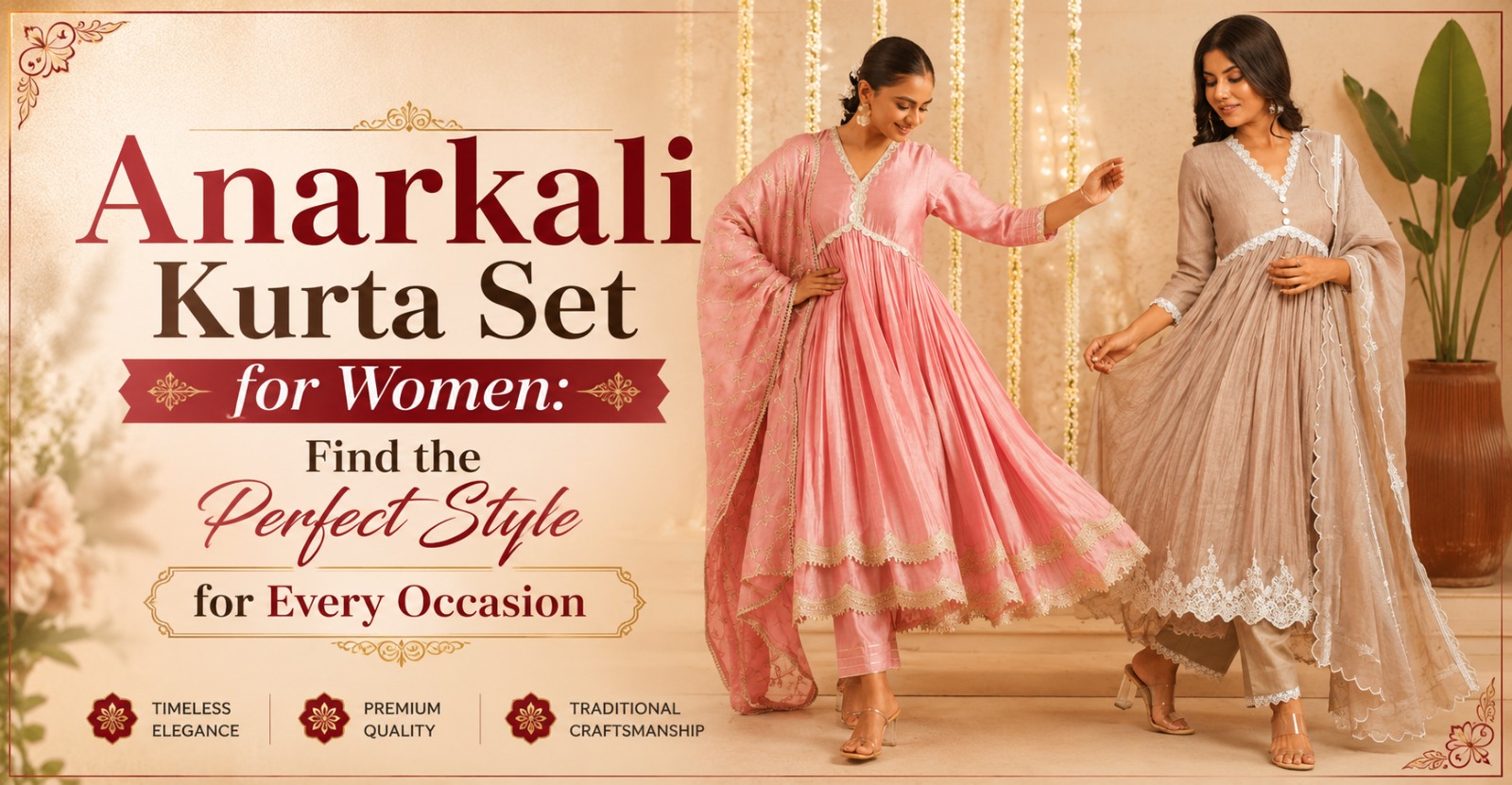



Let us be honest about something. Most women who own a garara set did not plan to fall in love with it. They wore it once — maybe to a cousin’s wedding, maybe because their mother insisted — and something clicked. The way it moved. The way it felt. The way it made them stand differently, walk into a room with a quiet authority they were not expecting from a piece of fabric.
That is the thing about the garara set for women. It does not announce itself the way a lehenga does. It earns you.
This guide is for women who are curious about it — whether you are shopping for your first one, trying to understand why your grandmother still swears by it, or simply figuring out what to wear to your best friend’s nikaah next month. We will cover everything: what it actually is, which fabric to choose, how to wear it for your body, and when to reach for it over anything else in your wardrobe.
What Is a Garara Set and Where Did It Actually Come From
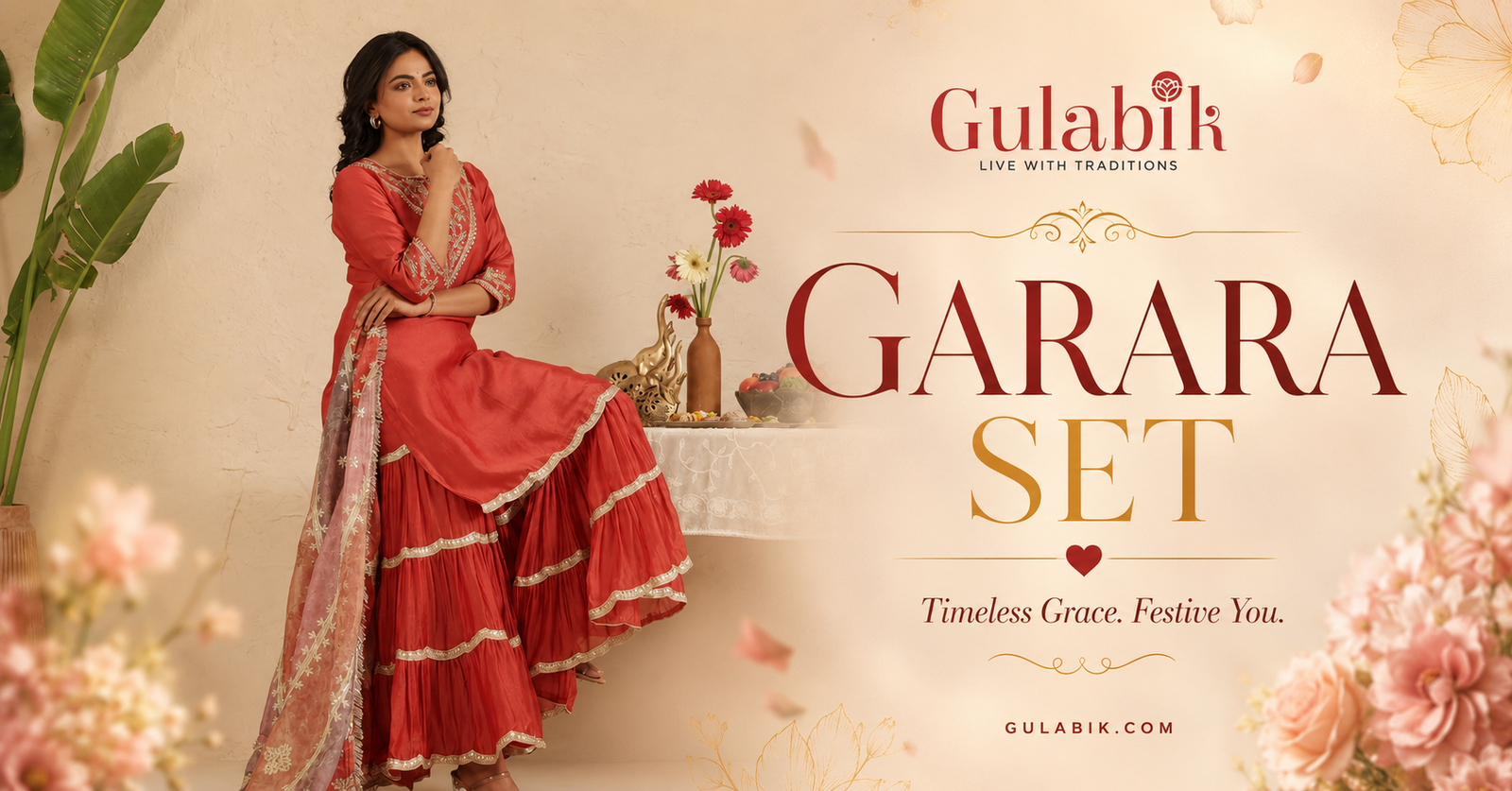
The garara set for women is a three-piece outfit: a short kurta or kameez, a dupatta, and the garara itself — wide trousers that fit snugly at the hips and then flare dramatically from the knee down. That flare, usually created through heavy gathering or cartridge pleating, is what gives the silhouette its signature look. Bell-shaped, floor-length, unmistakable.
It comes from the courts of Awadh, Lucknow, specifically,where Nawabi culture produced some of the most refined clothing traditions on the subcontinent. Women of the nobility wore layered, flowing garments that moved beautifully and communicated elegance without effort. The garara set for women was one of them. It was not designed for show. It was designed for grace.
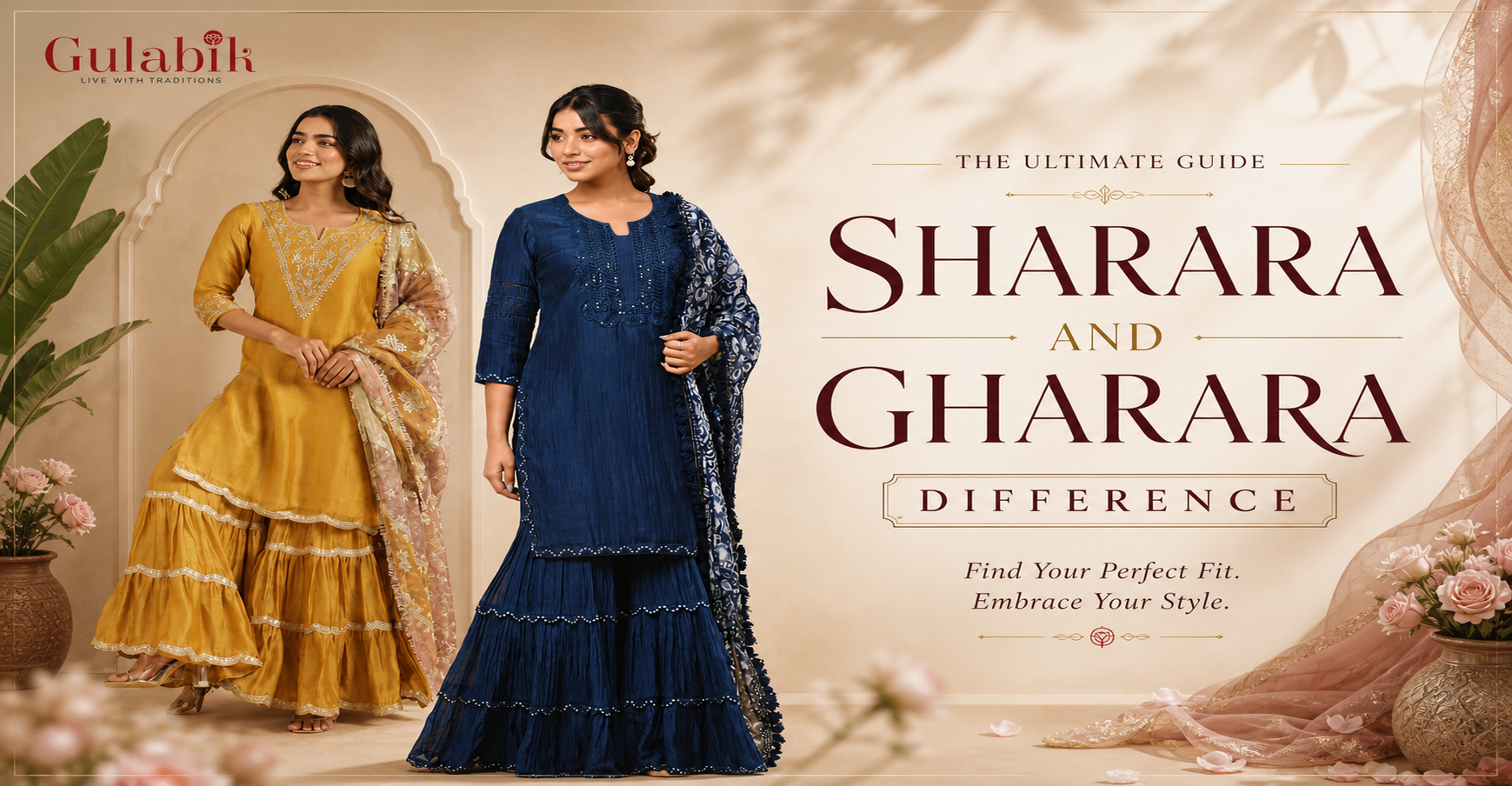
What makes it different from the sharara? The sharara flares from the waist. The garara fits at the hips and thighs and opens up only from the knee. That fitted upper section is what gives the silhouette its structure — more tailored, more intentional, and in many ways more flattering across a wider range of body types.
Over the centuries it travelled out of Lucknawi courts and into homes across UP, Bihar, Hyderabad, and beyond. Every region added something — a different embroidery tradition, a local fabric, a signature colour palette. What you see today in bridal boutiques and festive wear collections is the sum of all of that layering. It is old, yes. But it is not dated.
Choosing the Right Fabric: From Premium Silk to Breathable Georgette
This is where most women go wrong. They fall for a beautiful colour or an embroidery pattern and buy without thinking about the fabric — and then wonder why the outfit does not drape the way it did on the model. Fabric is everything with this silhouette.
Georgette — The One Most Women Should Start With
If you are buying your first one or you are not sure what to reach for, start with georgette. It is forgiving, it moves beautifully, and it suits almost every occasion on the festive calendar. The lightness of the fabric means the wide flare falls the way it is supposed to — not stiff, not limp, but fluid and alive.
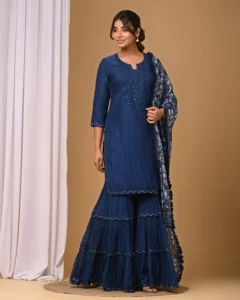
Chiffon georgette is particularly good for embroidered pieces. It takes zari and zardozi without stiffening up the way heavier fabrics do. For daytime weddings and summer functions, a georgette garara set for women in any soft colour — rose, mint, ivory, mauve — will keep you comfortable without looking like you are wilting. For evenings, go deeper. Midnight blue, forest green, wine red. The fabric catches the light gently and the colours become richer under warm lighting.
Silk and Banarasi — When the Occasion Demands Presence
There is a version of this silhouette that does not flutter. Silk does not move the way georgette does — it walks. It has weight and intention. A silk garara set for women settles into its shape and stays there, which gives it a formality that is appropriate for certain occasions and completely wrong for others.
For weddings where you are immediate family, or for bridal wear itself, silk is worth considering. Banarasi silk in particular does something remarkable — the brocade weave threads gold or silver directly into the fabric, so the material itself becomes the decoration. You do not need heavy embroidery on top of it. The fabric is the statement. Deep red, ivory, and antique gold are the classic choices. They read as serious and considered.
Chanderi — The Underrated Choice
Not enough women consider chanderi for this silhouette, and that is a real shame. Chanderi is woven in a small town in Madhya Pradesh from a blend of silk and cotton. It is light, slightly sheer, and has a gentle natural lustre that does not shout. It looks expensive without trying.
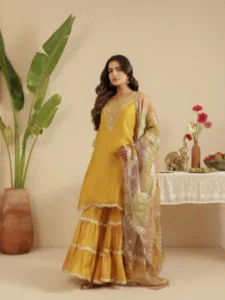
A chanderi version in ivory or pale yellow with simple block print borders is the kind of outfit that works for a daytime Eid gathering, a festive office celebration, or any occasion that falls between casual and grand. Comfortable enough to wear all day. Refined enough that people will ask you where you got it.
Styling Guide: How to Wear a Garara Set for Your Body Type
The silhouette is far more adaptable than most women assume. A few principles make a significant difference.
Styling Tips for Petite Frames: Creating Length with Ghararas
The instinct for petite women is to avoid volume. Resist it. A short kurta — one that ends at mid-hip — paired with the wide flared trouser creates the impression of a much longer leg line. The eye is drawn upward, and the flare reads as height rather than width. Choose a single tonal colour or a vertical embroidery pattern, both of which add visual length. Avoid very heavy or stiff fabrics — they will overwhelm a smaller frame rather than lift it.
If You Have a Fuller Figure
The garara set for women was, in many ways, built for curves. The fitted hip section gives structure and definition at the waist, while the dramatic flare below draws attention away from the widest point. Women with fuller figures often find this considerably more flattering than a palazzo or wide-leg salwar precisely because of how the silhouette is proportioned.
Wear a straight or A-line kurta that falls to mid-thigh. Drape your dupatta across one shoulder and let it fall in a long vertical line — this creates elongation through the centre of the body and counterbalances the volume of the flare beautifully.
If You Are Tall
You have the most options. A longer kurta, even an anarkali-style one that falls to the knee, will sit proportionally on a tall frame in a way it simply cannot on a shorter woman. Heavily embellished versions — fully worked kurtas with matching embroidered trousers — look extraordinary because there is more canvas to display the craft. You can also experiment with contrast-coloured dupattas and statement jewellery that might feel excessive on a smaller frame but reads as exactly right on yours.
Occasion Guide: Which Version to Wear and When
Bridal and Wedding Functions
The bridal garara set for women has had a genuine revival over the last several years — not because of trend cycles, but because women started asking why they had stopped wearing it in the first place. For families with Lucknawi or Hyderabadi heritage, this was always bridal attire. For many others, it is a rediscovery worth making.
A bridal version in deep red, ivory, or dusty rose with full zardozi embroidery or intricate mirror work photographs beautifully, particularly in motion. The flare catches light and air in a way that a lehenga simply does not. If you want to walk into your wedding knowing exactly who you are, this is the silhouette for that.
Eid and Religious Celebrations
Lighter fabrics, softer colours, restrained embroidery. A pale green or blush pink georgette garara set for women with thread embroidery at the hemline is everything Eid dressing should be — festive without trying too hard, polished without being stiff. Keep jewellery simple: a pair of jhumkas, thin gold bangles, a mathapatti if the occasion calls for it.
Sangeet and Mehndi Nights
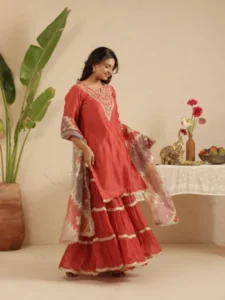
This is where you can have actual fun. Bright colours, mirror work, heavy embroidery, shorter dupattas. The silhouette is exceptionally expressive when dancing — the wide flare lifts and turns, and the movement becomes part of the occasion itself. Cobalt blue, fuchsia, tangerine — all of these work. Pair with block heels or embroidered juttis and a pair of earrings that you will remember wearing.
The Details: Dupatta, Jewellery, Footwear
How you drape the dupatta changes everything about the garara set. A single-shoulder drape reads as contemporary and easy. A back drape pinned at both shoulders is more formal. For dancing or long evenings, pin it at both shoulders and let it hang free behind you it stays in place and looks deliberate.
Match your jewellery to the weight of your fabric. Heavy silk and fully embroidered garara sets want gold chandbalis, polki sets, layered chains. Lighter georgette or chanderi pieces want restraint pearl drops, a simple gold chain, a few fine bangles.
Footwear: heels of any kind enhance the visual drama of the flare. Block heels are the most practical for long events. Embroidered juttis are equally beautiful and considerably kinder to your feet by the end of the evening.
Why the Garara Set Belongs in a Modern Indian Woman’s Wardrobe
Fashion moves in circles, and right now we are in a moment where Indian women are choosing their traditional clothing with more intention than they have in a generation. Not out of obligation, not because it is expected, but because they have looked at what is theirs and decided it is worth keeping.
The garara set for women fits that moment perfectly. It is not a costume. It is not a performance of culture. It is a well-designed garment with centuries of refinement behind it, worn by women who understand exactly what they are putting on and why it still makes sense today.
Buy it in a fabric that suits your life. Wear it to the occasions it was made for. And the next time someone asks you where you got it — tell them the whole story. Because the garara set for women is one of the few things in your wardrobe that actually has one worth telling.
Follow us on Instagram – Gulabik.jpr